If you’ve ever spotted a Mercedes-Benz approaching on the streets of Beaverton, Portland, or Hillsboro, OR, chances are you recognized it before reading the badge. The three-pointed star is one of the most recognizable automotive symbols in the world. It appears on luxury sedans, SUVs, coupes, convertibles, and performance models, and it has represented innovation for more than a century.
But what does the Mercedes-Benz logo actually mean?
The answer goes far beyond branding. The Mercedes-Benz emblem tells the story of the company’s origins, its founders, and a vision that helped shape the modern automobile. Whether you drive a 2026 Mercedes-Benz C-Class, 2026 Mercedes-Benz GLC, 2026 Mercedes-Benz GLE, or a high-performance 2026 Mercedes- AMG® model, the star on the hood carries a remarkable history.
The story starts with Gottlieb Daimler, one of the pioneers of the automobile industry. In the late 1800s, Daimler and engineer Wilhelm Maybach developed groundbreaking internal-combustion engines that would eventually power automobiles, boats, and aircraft.
According to Mercedes-Benz historical records, the inspiration for the famous star came from a postcard Daimler sent to his wife. He marked their home with a small three-pointed star and wrote that one day this star would shine over his life’s work.
That sketch became the foundation of one of the world’s most enduring logos.
In 1909, Daimler-Motoren-Gesellschaft (DMG) officially registered the three-pointed star as a trademark. At that time, it was a simple blue star without the circular border we know today.
This is the question most people ask.
The three points represent land, sea, and air. Daimler believed his company’s engines would one day power vehicles in all three environments.
The logo symbolized a bold ambition: universal motorization. In other words, Mercedes-Benz did not simply want to build cars. The company wanted its engineering expertise to extend wherever propulsion was needed.
That meaning has remained associated with the brand for more than 100 years.
In 1926, Daimler-Motoren-Gesellschaft merged with Benz & Cie., the company founded by Karl Benz, creator of the Patent-Motorwagen widely recognized as the first practical automobile.
The merger created Mercedes-Benz.
To mark the union, the Daimler three-pointed star was combined with Benz’s laurel wreath emblem. The wreath gradually evolved into the clean circular frame that surrounds the star today.
That circle is more than a design element. It represents the coming together of two pioneering automotive companies whose innovations helped define the luxury automobile.
One reason the Mercedes-Benz emblem feels timeless is that it has changed remarkably little.
Early versions featured a blue star with ornate detailing. The 1926 merger introduced the wreath and the “Mercedes-Benz” wordmark. By the 1930s, the emblem had been simplified into the elegant silver star enclosed by a thin ring.
Silver is not just a luxury color choice.
Mercedes-Benz has long been associated with the legendary Silver Arrows racing cars that dominated Grand Prix competition beginning in the 1930s. The polished silver finish became synonymous with speed, precision, and German engineering excellence.
Today, the silver emblem continues to communicate those same qualities:
It is a subtle reminder that Mercedes-Benz has roots not only in luxury transportation but also in motorsport and technical development.
AMG® models carry a different emblem.
The right side of the AMG® badge depicts a camshaft, valve, and valve spring. These engine components symbolize the brand’s commitment to performance engineering and handcrafted powertrains.
The left side features an apple tree and a river, which form the historic coat of arms of Affalterbach, Germany—the town where Mercedes-AMG® is headquartered.
That is why AMG® vehicles are often associated with the “One Man, One Engine” philosophy, where each engine is assembled by a single master technician.
The original meaning—land, sea, and air—still matters, but the emblem has taken on broader significance.
On today’s Mercedes-Benz vehicles, the star represents a blend of luxury, technology, and innovation. Features such as MBUX infotainment, advanced driver-assistance systems, electrified powertrains, and meticulously crafted interiors all reflect the brand’s ongoing pursuit of progress.
At Mercedes-Benz of Beaverton, that commitment extends beyond the vehicle itself. Guests can take advantage of Express Service for routine maintenance, a convenient pick up and drop off loaner vehicle system, available airport shuttles, and a pet-friendly environment designed to make every visit more comfortable.
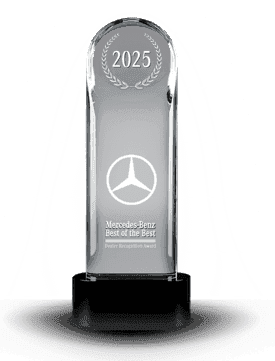
Those customer-focused amenities are part of the reason Mercedes-Benz of Beaverton has been recognized as a Best of the Best Winner in 2021, 2023, and 2025.
The name "Mercedes" comes from Mercedes Jellinek, the daughter of Austrian businessman Emil Jellinek, who played a major role in promoting Daimler automobiles in the early 1900s.*
The company later adopted Mercedes-Benz following the 1926 merger of Daimler and Benz.
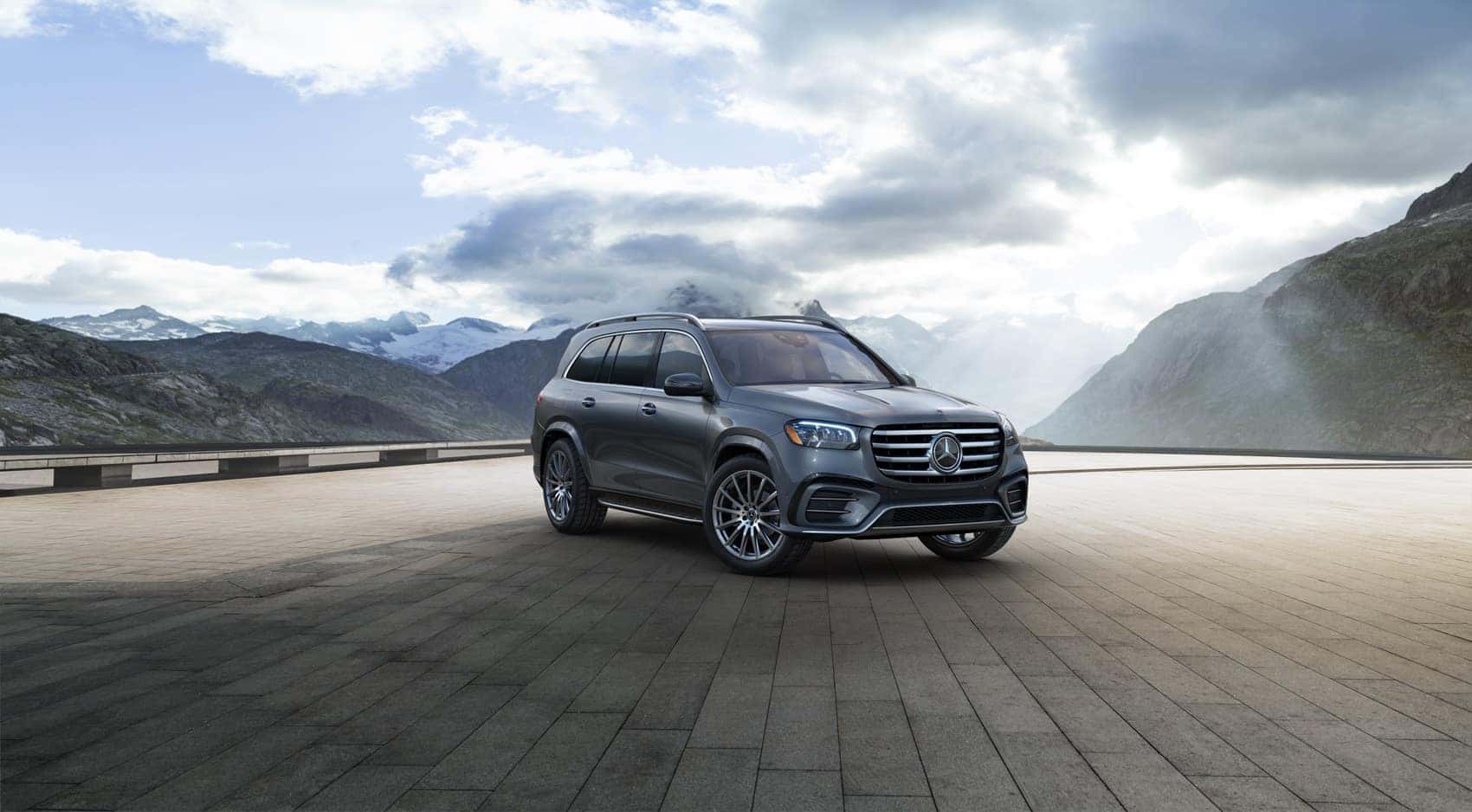
No. Depending on the model, the three-pointed star may appear as a standing hood ornament, a large grille-mounted emblem, or a flat badge integrated into the front fascia.
The placement varies by vehicle design and trim.
Many owners personalize their Mercedes-Benz with accessories or appearance packages, but the factory emblem itself is designed to reflect the brand's heritage and is generally retained in its iconic form.
Some models also offer illuminated grille stars or different wheel center cap designs for added personalization.
The Mercedes-Benz logo has stood for innovation, craftsmanship, and engineering excellence for more than a century. From its origins as a simple three-pointed star inspired by Gottlieb Daimler's vision to its place on today's luxury vehicles, the emblem continues to represent the pursuit of performance and progress.
If you’re interested in test driving a Mercedes-Benz, contact Mercedes-Benz of Beaverton today.
*Source: Mercedes-Benz Group